24 Oct, 2026 | 35 Views | Apple Insulated Wires
How to Choose an Enameled Aluminium Wire Manufacturer in India
Choosing the right enameled aluminium wire manufacturer in India is an important decision for electrical equipment manufacturers, motor manufacturers, transformer manufacturers, and industrial procurement teams. The quality of winding wire can influence insulation reliability, winding efficiency, production consistency, and the overall performance of electrical equipment.
When comparing enameled aluminium wire manufacturers, buyers should consider more than the quoted price. Conductor dimensions, enamel coating quality, thermal classification, electrical testing, technical support, and supply reliability are equally important. Selecting a supplier that understands application requirements can help businesses source suitable materials and reduce manufacturing complications.
This guide explains the essential factors to consider when selecting an enameled aluminium winding wire manufacturer, the technical specifications to evaluate, and the questions industrial buyers should ask before placing an order.
What Is Enameled Aluminium Winding Wire?
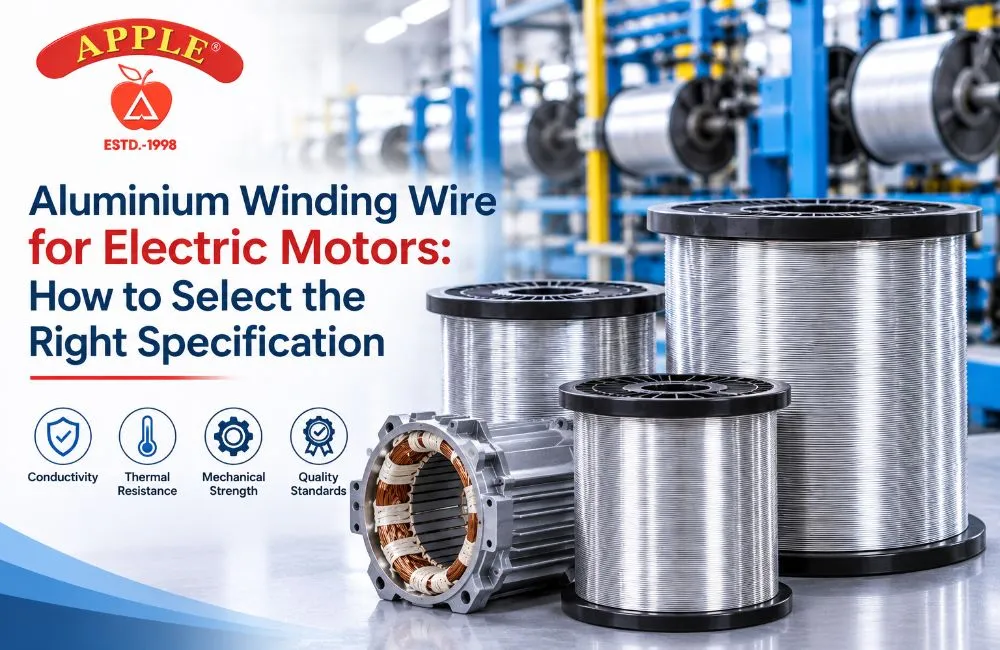
Enameled aluminium winding wire is an aluminium conductor coated with a thin layer of electrical insulating enamel. It is used to manufacture coils and windings in electrical equipment where adjacent turns must remain electrically insulated from one another.
The aluminium conductor provides the path for electrical current, while the enamel coating helps prevent direct electrical contact between neighbouring wire turns. The insulation system must be suitable for the electrical, thermal, and mechanical conditions of the intended application.
Unlike uninsulated aluminium wire, insulated aluminium winding wire includes an enamel layer designed to provide electrical separation between conductors. The coating must also withstand the stresses associated with winding, handling, and equipment assembly.
Enameled aluminium winding wire is used in applications such as electric motors, transformers, inductors, electromagnets, and other electrical assemblies. The appropriate wire specification depends on the equipment design, operating conditions, and applicable technical requirements.
Key Factors to Consider When Choosing an Enameled Aluminium Wire Manufacturer in India
Selecting a suitable manufacturer requires evaluating product quality, manufacturing consistency, technical capabilities, and commercial reliability. The following factors can help procurement teams make informed decisions.
1. Evaluate Manufacturing Capabilities
Start by checking whether the manufacturer can supply the required conductor sizes, insulation specifications, and order quantities. Different applications require different combinations of wire dimensions and enamel properties, so the supplier's actual product range should match your needs.
Ask about production consistency, inspection procedures, and the availability of technical documentation. If your business requires regular deliveries, confirm whether the manufacturer can support your expected purchasing schedule.
A supplier with clearly defined product specifications and quality procedures makes it easier to establish consistent purchasing requirements across multiple orders.
2. Check Aluminium Conductor Quality
The aluminium conductor should meet the agreed material specifications and dimensional tolerances. Variations in conductor diameter may affect winding calculations, space utilisation, and electrical characteristics.
Before selecting a supplier, confirm the nominal conductor diameter, permissible tolerances, and relevant material requirements. Request technical documentation or test results where applicable.
Buyers should also verify that the supplied wire matches the approved specification. This is particularly important for production environments where winding dimensions and material consistency affect downstream manufacturing processes.
3. Examine Enamel Coating Quality
The enamel coating is a critical part of the wire's electrical insulation system. Uneven coating, surface defects, or inadequate insulation performance may create problems during winding, assembly, or equipment operation.
Ask the manufacturer how coating uniformity and insulation integrity are evaluated. Relevant checks may include coating dimensions, electrical breakdown testing, and other tests specified for the product.
The coating should be compatible with the intended winding process and operating conditions. A wire should not be selected based on appearance alone; technical test results and application requirements also need to be considered.
4. Confirm Available Wire Sizes and Specifications
Different electrical applications require different conductor dimensions, insulation types, and thermal classes. Before placing an order, confirm the availability of the required wire diameter, dimensional tolerance, enamel grade, and other relevant parameters.
If your equipment requires a specific specification, share the details with the manufacturer before requesting a quotation. Discuss any customisation requirements and confirm whether the proposed wire meets your application needs.
Do not assume that every enameled aluminium wire manufacturer offers the same range of dimensions, insulation systems, or product grades.
5. Assess Electrical, Thermal, and Mechanical Performance
Winding wire must be suitable for the operating conditions of the finished equipment. Electrical insulation, temperature exposure, mechanical handling, and winding stresses can all influence product suitability.
Ask the manufacturer to confirm the applicable thermal class, insulation characteristics, and relevant performance tests. The required properties should be determined by the equipment design and operating environment rather than by general marketing descriptions.
For example, wire intended for a particular motor design may require different insulation characteristics from wire used in another electrical assembly. Application-specific evaluation helps buyers avoid selecting a product that does not meet the intended requirements.
6. Review Quality Control and Testing Procedures
A reliable sourcing process should include a review of the manufacturer's quality control procedures and the documentation available for the supplied wire.
Depending on the product specification, relevant checks may include conductor dimensions, enamel coating, electrical breakdown performance, elongation, and surface condition. Ask whether the supplier can provide a technical data sheet, applicable test reports, or a Certificate of Analysis (COA), where available.
Check that the documentation corresponds to the correct product grade and batch. Clearly documented acceptance criteria make it easier to compare suppliers and establish expectations before bulk procurement.
7. Consider Packaging, Storage, and Transportation
Winding wire must be handled and transported carefully to help prevent physical damage, contamination, and deformation. Damage to the enamel coating may affect the wire's suitability for winding applications.
Confirm the available spool or reel formats, packaging arrangements, labelling, and transportation requirements before ordering. For bulk purchases, clarify how different lots will be identified and protected during storage and delivery.
Appropriate handling and packaging procedures help maintain material condition between dispatch and use in the production facility.
8. Evaluate Technical Support and Communication
Clear technical communication is important when selecting insulated aluminium winding wire. Buyers may need assistance understanding available wire sizes, insulation grades, thermal classes, or testing requirements.
Evaluate how effectively the supplier answers specification-related questions and provides product documentation. If samples are available, ask about the process for evaluating them before approving a bulk order.
Good communication before purchasing can help resolve specification differences early and reduce misunderstandings between the procurement, engineering, and supplier teams.
9. Compare Supply Reliability and Commercial Terms
Price is an important purchasing consideration, but it should be evaluated alongside technical compliance, quality consistency, packaging, and delivery commitments.
Before confirming an order, discuss minimum order quantities, lead times, payment terms, delivery schedules, and the process for handling non-conforming material. Businesses that depend on regular production should also clarify the supplier's ability to support recurring orders.
Comparing quotations against the same technical specification provides a more meaningful basis for evaluating different enameled aluminium wire manufacturers.
Important Technical Specifications to Evaluate
Before purchasing enameled aluminium winding wire, review the following parameters against your equipment requirements.
|
Specification |
What to verify |
|
Conductor diameter |
Nominal diameter and permissible tolerance |
|
Enamel coating |
Thickness, uniformity, and insulation integrity |
|
Thermal class |
Suitability for the intended operating temperature |
|
Electrical breakdown performance |
Compliance with specified test requirements |
|
Elongation |
Suitability for the required winding process |
|
Surface quality |
Absence of defects that could affect processing |
|
Applicable standards |
Relevant IS, IEC, or NEMA requirements, where specified |
These parameters should be assessed together. A wire may meet the required conductor diameter but still be unsuitable if its insulation system does not meet the application's thermal or electrical requirements.
Confirm the applicable standards, test methods, and acceptance limits with the manufacturer. Avoid assuming that all enameled aluminium wires have identical technical properties.
Applications of Enameled Aluminium Winding Wire
Enameled aluminium winding wire is used in several electrical and electromagnetic applications, subject to the suitability of the selected specification.
-
Electric motors: Used in motor windings where conductor dimensions and insulation characteristics must meet the motor design requirements.
-
Transformers: Considered for transformer windings when the conductor and insulation system meet the specified electrical and thermal conditions.
-
Inductors and coils: Used in electromagnetic components requiring insulated conductor turns.
-
Electromagnets and solenoids: Suitable for selected designs that use insulated windings to generate magnetic fields.
-
Electrical equipment and appliances: Used in winding assemblies according to the equipment manufacturer's technical requirements.
The correct wire should be selected according to the equipment design, operating conditions, winding process, and applicable standards. Not every wire grade is suitable for every application.
Common Mistakes to Avoid When Selecting a Manufacturer
Industrial buyers can reduce sourcing risks by avoiding several common mistakes.
Choosing on price alone: A lower quotation may not provide the best value if the wire fails to meet the required specifications.
Ignoring insulation requirements: The enamel type and thermal class must be appropriate for the intended operating conditions.
Overlooking dimensional tolerances: Incorrect conductor dimensions can create winding and production difficulties.
Skipping documentation checks: Review relevant technical specifications and test reports before approving bulk orders.
Assuming all suppliers offer identical products: Available wire sizes, insulation grades, testing procedures, and customisation options can differ.
Leaving delivery terms unclear: Confirm order quantities, lead times, packaging, and delivery schedules before finalising the purchase.
A clearly defined purchase specification makes supplier evaluation more objective and helps reduce confusion during ordering.
Why Consider Apple Wires?
Apple Insulated Wires Pvt. Ltd., operating through Apple Wires, offers a product range that includes super enameled aluminium winding wires, super enameled copper winding wires, submersible winding wires, and cables.
For buyers exploring enameled aluminium winding wire, the company website provides a starting point for reviewing available products and discussing purchasing requirements. Buyers should confirm the required conductor size, insulation grade, thermal class, testing documentation, and order quantity directly with the company.
Explore the super enameled aluminium winding wire range to review the relevant product category. You can also visit the Apple Wires products page for additional product information.
Conclusion
Choosing the right enameled aluminium wire manufacturer in India requires a careful assessment of conductor quality, insulation performance, technical specifications, quality control, and supply reliability. Buyers should verify dimensional tolerances, enamel coating characteristics, thermal class, relevant test documentation, and application compatibility before placing an order.
Comparing suppliers against a clearly defined specification helps procurement teams evaluate products more consistently and make informed purchasing decisions. Technical support, transparent commercial terms, and reliable communication are also important for ongoing industrial requirements.
If you are looking for enameled aluminium winding wire for motors, transformers, coils, or other electrical applications, visit Apple Wires to explore its product range. You can also use the contact page to enquire about available specifications and supply requirements.