28 Oct, 2026 | 23 Views | Apple Insulated Wires
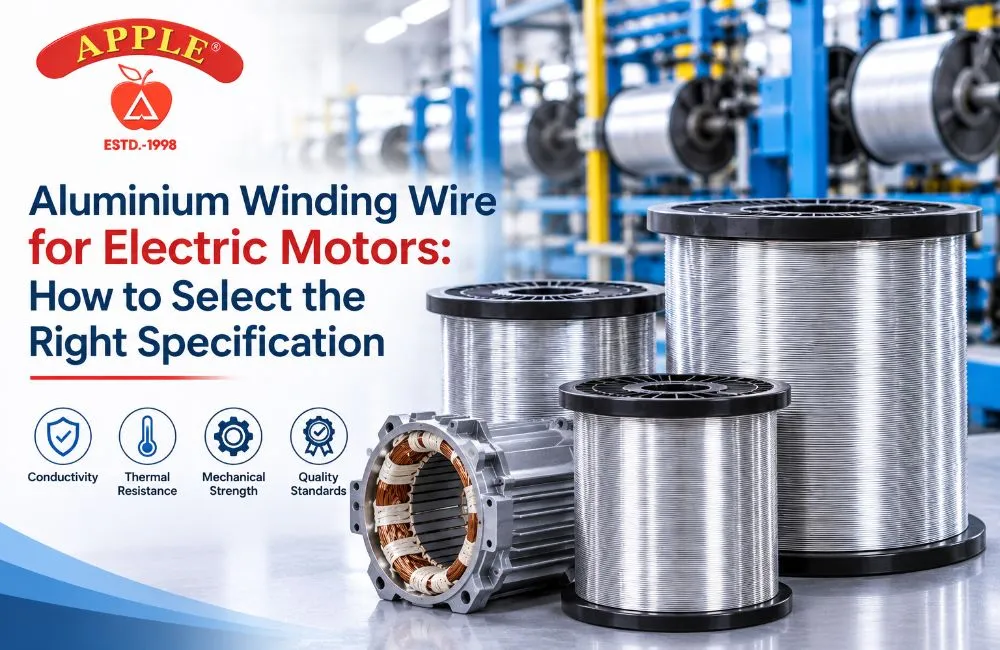
Aluminium Winding Wire for Electric Motors: How to Select the Right Specification
Selecting the right aluminium winding wire is an important decision in electric motor manufacturing. The wire specification affects electrical resistance, winding design, insulation reliability, heat management, and production consistency. For motor manufacturers, original equipment manufacturers (OEMs), electrical equipment manufacturers, and procurement teams, choosing a suitable wire helps ensure that the winding material meets the motor's design and operating requirements.
Aluminium winding wire is used in selected electrical applications because aluminium is lightweight and offers a lower-density alternative to copper. However, aluminium has lower electrical conductivity than copper, so conductor dimensions and winding design must be evaluated carefully. Choosing the correct specification requires more than comparing wire diameter or purchase price.
When selecting aluminium wire for electric motors, buyers should assess conductor size, enamel coating, thermal class, electrical properties, mechanical characteristics, and quality documentation. This guide explains the key specifications and practical considerations for choosing suitable enameled aluminium winding wire for different motor applications.
What Is Aluminium Winding Wire?
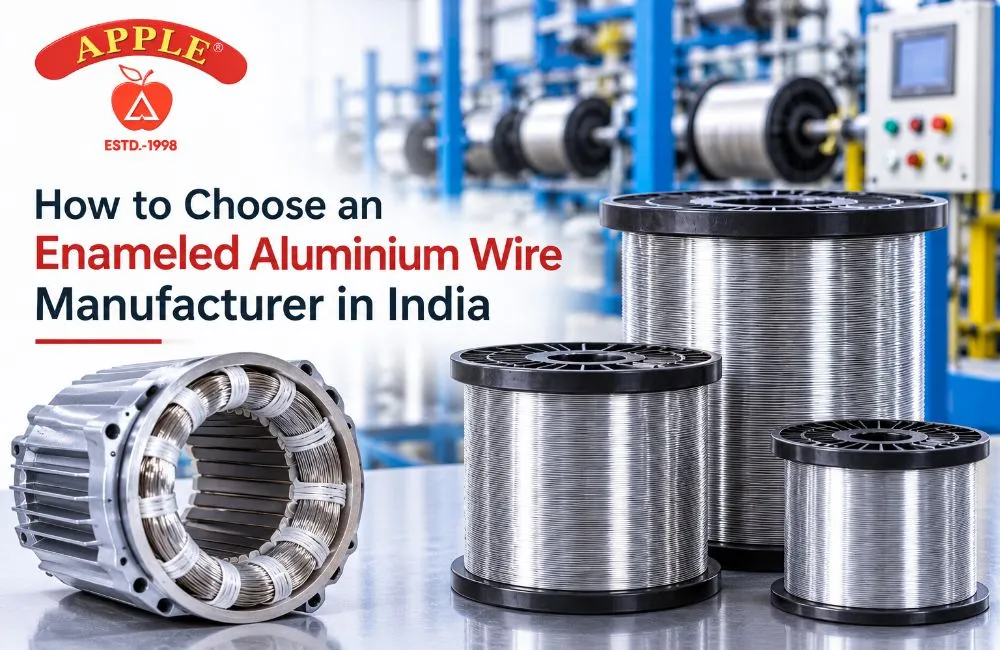
Aluminium winding wire is an electrical conductor used to create coils and windings in motors and other electrical equipment. Depending on the application, it may be supplied as a bare conductor or with an insulating coating.
Enameled aluminium winding wire consists of an aluminium conductor covered with a thin layer of electrical insulating enamel. This coating helps prevent direct electrical contact between adjacent turns in a winding. The insulation system must be appropriate for the electrical, thermal, and mechanical conditions of the intended application.
Bare aluminium wire does not have this enamel insulation and should not automatically be considered a direct substitute for insulated winding wire. The correct conductor and insulation type depend on the equipment design and applicable technical requirements.
Insulated aluminium winding wire is used in selected motor and electrical winding applications where its dimensions and performance meet the specified requirements. Understanding the motor's design, winding arrangement, and operating conditions is essential before choosing a particular wire grade.
Why Is Wire Specification Important for Electric Motors?
Electric motors rely on correctly designed windings to convert electrical energy into mechanical energy. The conductor and insulation must work together within the motor's electrical and thermal limits.
Several factors make wire specification important.
-
Electrical resistance: Conductor material, cross-sectional area, length, and temperature influence resistance and winding losses.
-
Current requirements: The conductor must be appropriate for the motor's designed current and operating conditions.
-
Winding space: Conductor dimensions and enamel thickness affect how the wire fits within the available slots.
-
Insulation integrity: The enamel coating helps maintain electrical separation between adjacent turns.
-
Thermal performance: The insulation system must tolerate the expected operating temperature and thermal environment.
-
Mechanical handling: The wire must withstand the stresses associated with winding, forming, and assembly.
Aluminium has lower electrical conductivity than copper. Therefore, replacing copper with aluminium requires an engineering assessment of conductor area, resistance, winding configuration, connections, and thermal performance. A direct one-to-one dimensional substitution should not be assumed.
Key Specifications to Check When Selecting Aluminium Winding Wire
1. Conductor Diameter and Dimensional Tolerance
Conductor diameter is one of the first specifications to verify. It affects the conductor's cross-sectional area, resistance, and the space occupied within the motor winding.
A diameter that differs from the approved specification can affect winding calculations, slot utilisation, and production consistency. Buyers should confirm the nominal conductor diameter and permissible tolerance before ordering.
It is also important to distinguish between the diameter of the bare aluminium conductor and the overall diameter after enamel insulation. Both measurements can matter when evaluating winding space and slot-fill requirements.
2. Enamel Coating Thickness and Uniformity
The enamel coating provides electrical insulation between adjacent wire turns. Its thickness and uniformity must comply with the applicable product specification.
An unsuitable coating can cause problems during winding, handling, or motor operation. Excessive overall wire dimensions may affect available winding space, while inadequate insulation performance may compromise electrical separation.
Ask the supplier to confirm the relevant insulation specifications and available test documentation. Coating dimensions should be selected according to the motor design rather than a general assumption.
3. Thermal Class
Thermal class identifies the temperature classification associated with an insulation system under specified conditions. It is an important consideration because motor windings generate heat during operation.
The selected insulated aluminium winding wire should have an insulation system suitable for the motor's expected thermal conditions. Buyers should consider operating temperature, cooling arrangements, duty cycle, and other relevant design factors.
Thermal class should not be evaluated in isolation. The complete insulation system and the operating requirements of the finished motor must be considered together.
4. Electrical Breakdown Performance
Electrical breakdown testing helps assess the ability of enamel insulation to withstand an applied voltage under specified test conditions.
This is particularly relevant when evaluating wire intended for closely packed motor windings. Buyers should confirm the applicable test method, acceptance criteria, and supporting documentation with the manufacturer.
Electrical breakdown performance should be evaluated alongside coating quality and other relevant insulation characteristics.
5. Mechanical Properties
Winding wire experiences mechanical stress during winding, bending, handling, and assembly. Relevant mechanical properties may include elongation, flexibility, and resistance to coating damage under specified conditions.
The appropriate requirements depend on the wire grade and winding process. Buyers should discuss manufacturing requirements with the supplier and review relevant test results where applicable.
6. Conductor Resistance
Conductor resistance affects electrical losses and heat generation in motor windings. It depends on conductor material, cross-sectional area, wire length, and temperature.
When evaluating aluminium winding wire, motor designers should assess resistance against the electrical design requirements. Conductor dimensions and winding length must be considered together rather than evaluating diameter in isolation.
For procurement, confirm the applicable material specifications and resistance requirements before approving a wire grade.
7. Applicable Standards and Documentation
Depending on the product and intended application, relevant Indian Standards (IS), IEC standards, NEMA requirements, or other specified standards may apply.
Buyers should identify the applicable requirements and confirm which standards the proposed wire is designed and tested to meet. Not every wire grade follows the same specification.
Request relevant technical data sheets, test reports, and a Certificate of Analysis (COA), where applicable. Documentation should correspond to the specified product and supplied batch.
How to Select the Correct Aluminium Winding Wire Diameter
The correct wire diameter should be determined from the motor's electrical design and winding requirements, not from motor power alone.
Motor manufacturers should consider the following factors:
-
Current and conductor area: Determine the required conductor cross-sectional area based on the electrical design and operating conditions.
-
Winding configuration: Consider the number of turns, winding arrangement, and available slot space.
-
Insulation dimensions: Account for the enamel coating when calculating the space occupied by the finished wire.
-
Thermal requirements: Evaluate winding losses, cooling conditions, and permissible operating temperatures.
-
Manufacturing process: Ensure the wire dimensions are suitable for winding equipment and assembly procedures.
Because aluminium and copper have different electrical properties, changing from one conductor material to another requires engineering evaluation. A motor designer should verify resistance, current requirements, connections, winding space, and thermal performance before approving a change in conductor size.
Choosing the Right Enamel Insulation and Thermal Class
Selecting the correct enamel insulation is as important as choosing the conductor diameter. The coating must provide suitable electrical separation while withstanding mechanical stresses during winding and assembly.
When evaluating enameled aluminium winding wire, confirm the insulation type, coating dimensions, thermal classification, and applicable electrical test requirements. The selected insulation system should be compatible with the motor's operating temperature and service conditions.
Buyers should also consider whether the wire will be used in new motor manufacturing or motor rewinding and repair. Existing motor designs may specify particular conductor dimensions and insulation requirements that need to be maintained.
The best approach is to establish the technical requirements first and compare available products against those requirements. This helps avoid selecting an insulation grade based only on price or general product descriptions.
Applications of Aluminium Wire for Electric Motors
Aluminium wire for electric motors can be considered for applications where the motor design accommodates its electrical and mechanical characteristics.
Common application areas include:
-
Industrial motors: Used in selected motor designs according to the required winding specifications.
-
Pump motors: Considered for suitable designs used in water-handling and industrial pumping equipment.
-
Fan and blower motors: May be used where conductor and insulation requirements are met.
-
Electrical equipment: Used in selected coils and winding assemblies requiring an aluminium conductor.
-
Motor manufacturing and rewinding: Used when the specified wire type, dimensions, and insulation characteristics are appropriate for the design.
These are potential application areas rather than a guarantee of universal compatibility. Motor design, current requirements, operating temperature, winding configuration, and applicable standards determine whether a particular wire specification is suitable.
Quality Testing and Inspection Before Procurement
Quality inspection helps buyers verify that the supplied winding wire meets the agreed specifications. Before approving a bulk order, procurement teams should establish which tests and documents are required.
Important checks may include conductor diameter and dimensional tolerance, enamel coating dimensions, electrical breakdown performance, conductor resistance where applicable, and mechanical properties such as elongation.
Buyers should also review technical data sheets, relevant test reports, and batch identification information. For recurring orders, consistent documentation helps compare deliveries against the approved product specification.
Test methods and acceptance limits should follow the applicable product specification and standards. Establishing a process for reporting and resolving deviations can also help reduce procurement risks.
Common Mistakes to Avoid When Selecting Aluminium Winding Wire
Several common purchasing mistakes can create complications during motor manufacturing.
Choosing based only on price: A lower quotation may not provide the best value if the wire does not meet the motor's technical requirements.
Ignoring the difference between bare and insulated diameter: The enamel coating affects the overall space occupied by the wire and should be included in winding calculations.
Assuming aluminium and copper are interchangeable: Differences in conductivity and other material properties require engineering evaluation before changing conductor material or dimensions.
Overlooking thermal class: The insulation system must be suitable for the intended operating conditions.
Skipping quality documentation: Review technical specifications and relevant test results before approving bulk orders.
Failing to clarify supply requirements: Confirm available sizes, minimum order quantities, packaging, lead times, and delivery arrangements before placing an order.
A documented specification helps buyers compare suppliers more effectively and reduces the risk of receiving material that does not match the intended application.
Why Consider Apple Wires?
Apple Wires offers a product range that includes super enameled aluminium winding wires and super enameled copper winding wires, alongside other winding wire and cable products.
For businesses sourcing aluminium winding wire, reviewing the manufacturer's product range is a useful starting point. Buyers should confirm the required conductor dimensions, insulation specifications, thermal class, testing documentation, and order quantities directly with the company.
Explore the super enameled aluminium winding wire range to review the relevant product category. You can also visit the Apple Wires products page for additional product information.
For application-specific enquiries, visit the Apple Wires contact page to discuss available specifications and supply requirements.
Conclusion
Selecting the right aluminium winding wire for electric motors requires a clear understanding of conductor dimensions, electrical resistance, enamel insulation, thermal class, mechanical properties, and winding design. Each parameter should be evaluated according to the motor's electrical requirements, operating conditions, and manufacturing process.
Motor manufacturers and procurement teams should establish the required specifications before comparing suppliers. Reviewing relevant test reports, confirming dimensional tolerances, and checking insulation performance can help ensure that the selected wire meets the intended application requirements.
If you are looking for aluminium winding wire for electric motors, explore the product range at Apple Wires and contact the company to enquire about available specifications and supply options.